Microprocessor Icon from IoT Collection: A Practical Choice for Modern Design Projects
Designing templates, web interfaces, or infographics often requires clear, scalable visual elements that communicate complex ideas efficiently. The Microprocessor Icon from IoT Collection serves as a streamlined visual representation of computing hardware, particularly relevant in tech-centric content. As part of a broader set of IoT-related graphics, this icon offers both functional clarity and stylistic versatility.
Understanding the Microprocessor Icon from IoT Collection
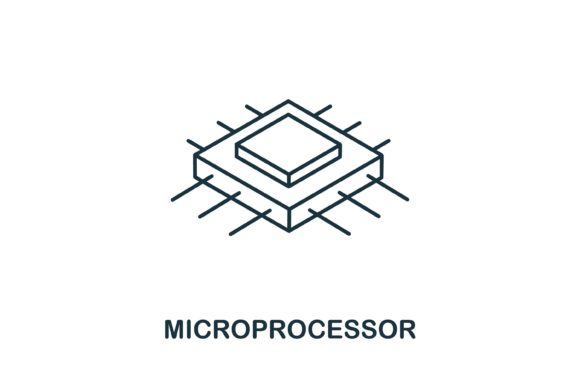
This icon is a simplified line-art depiction of a microprocessor, designed with minimal detail to ensure readability at various sizes. It is typically included in a larger set of Internet of Things (IoT) icons, making it a cohesive choice for projects that integrate multiple related symbols. The file formats—EPS and JPG—allow for both vector scalability and immediate usability in common design tools.
Its simplicity makes it ideal for use in presentations, dashboards, mobile apps, and educational materials where technical components need to be visually represented without overwhelming the viewer. The clean design supports a modern aesthetic and integrates well with flat or minimalist design systems.
Comparing Microprocessor Icon from IoT Collection with Other Icon Styles
When evaluating iconography, designers often weigh between custom illustrations, stock icon sets, and specialized design kits. The Microprocessor Icon from IoT Collection falls into the category of standardized, pre-designed icons, offering a balance between accessibility and specificity.
- Custom illustrations allow for full creative control but require time, skill, and resources to develop.
- General-purpose icon sets are widely available but may lack relevance for niche topics like microprocessors or IoT.
- Specialized kits like the IoT Collection offer targeted imagery, making them a practical middle ground.
For projects that require a consistent visual language across multiple technical components, using a pre-designed icon like this one can save time while maintaining thematic coherence.
File Formats and Editing Flexibility
The availability of both EPS (vector) and JPG (raster) files gives users flexibility depending on their needs. The EPS file is ideal for scaling without loss of quality, which is crucial for print, responsive web design, or large-format displays. The JPG version provides immediate usability for those who don’t need editing capabilities or who work in platforms that don’t support vector files.
Compared to icons available only in raster formats, the inclusion of EPS makes the Microprocessor Icon from IoT Collection more adaptable for professional use. However, it lacks the layer editing and animation potential found in formats like SVG or PNG with transparency, which may be a consideration depending on the application.
Strengths and Tradeoffs
One of the primary strengths of this icon is its clarity and recognizability. The microprocessor symbol is not always intuitive, but this design uses familiar cues—like a grid-like chip structure and connecting pins—to ensure it is easily understood in context.
Its simplicity also contributes to faster loading times on websites and smoother rendering in applications, which is especially valuable for mobile interfaces or embedded systems. However, this minimalism may limit its usefulness in contexts where a more detailed or branded representation is desired.
Additionally, since it is part of an IoT-themed collection, its usefulness may be somewhat context-dependent. Users working outside the IoT domain may find it less relevant unless they are building a broader technology-related visual identity.
Best Use Cases
The Microprocessor Icon from IoT Collection excels in environments where visual consistency and technical accuracy are both important. It is particularly well-suited for:
- Infographics explaining IoT device architecture
- User interfaces for embedded systems or hardware dashboards
- Educational materials covering computer engineering basics
- Marketing materials for tech startups or hardware manufacturers
In each of these scenarios, the icon serves as a quick visual cue without requiring additional explanation. It supports the message rather than overshadowing it.
When to Consider Alternatives
While the Microprocessor Icon from IoT Collection offers many practical benefits, it may not be the best fit for every project. For instance:
- If your design requires a highly customized look, purchasing a single pre-made icon may not provide the flexibility you need.
- If you're working with non-technical audiences, a more abstract or metaphorical symbol might be more effective than a literal microprocessor image.
- If your project involves animated or interactive elements, you may need a format or file type that allows for more dynamic manipulation.
In such cases, exploring custom design services or broader icon libraries that allow for mixing and matching styles might be a better investment.
Decision Factors to Consider
When deciding whether to use the Microprocessor Icon from IoT Collection, consider the following factors:
- Project scope: Is this a one-time need or part of a larger design system?
- Target audience: Will they understand the icon’s meaning without explanation?
- Technical requirements: Do you need scalability, animation, or layered editing?
- Time and budget: Can you afford to commission custom graphics, or is a ready-made solution more practical?
By aligning these considerations with your specific goals, you can determine whether this icon is the most effective option for your needs.
Final Thoughts
The Microprocessor Icon from IoT Collection offers a clean, recognizable, and technically appropriate visual for representing computing hardware in modern design contexts. Its inclusion in a broader IoT-themed set adds value for those building cohesive technical visuals. While it may not suit every scenario, it stands out as a practical, ready-to-use resource for designers working in tech-related fields.
For users seeking a straightforward, scalable, and contextually relevant icon, this option provides a solid foundation. However, those with more specialized or creative needs may benefit from exploring alternative icon styles or custom solutions that better align with their unique design goals.